During Advent, we take time to reflect on the birth of Christ which was a historical and miraculous event that took place to fulfill God’s promise of sending a Messiah King to rescue His people and reign in their lives.
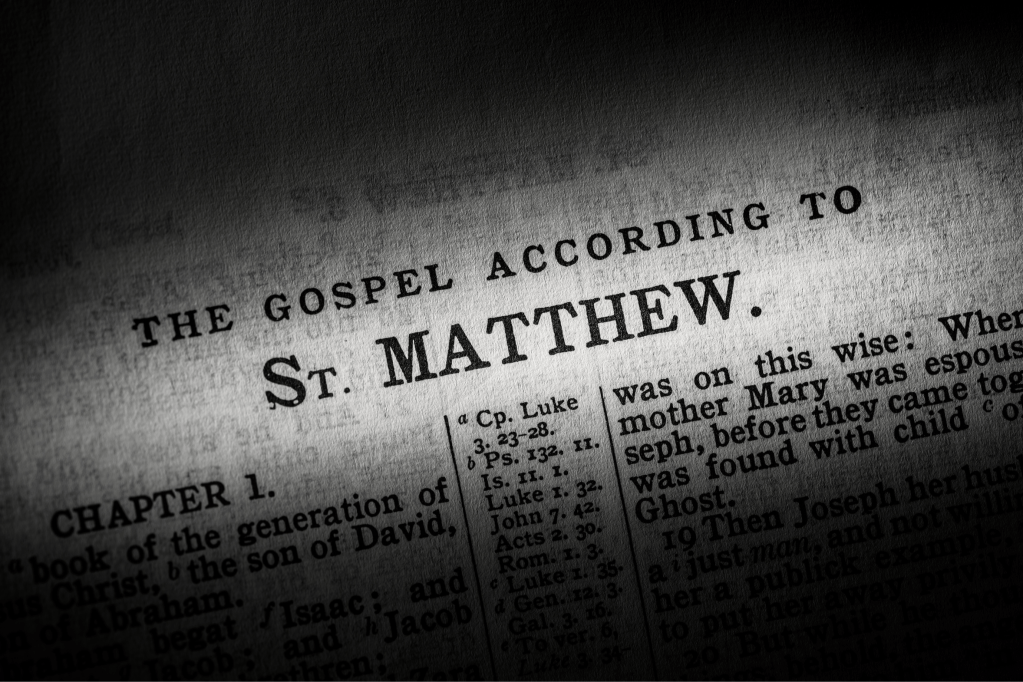
Have you ever wondered why the Book of Matthew begins with a genealogy? Many of us may skip over these sections when we read through them in Scripture, yet the Holy Spirit inspired the human authors to include them for good reason. There a several implications as to why Matthew began the Christmas story this way under the inspiration of the Holy Spirit and here are some of them to consider:
- It points us to God’s Great Redemption Story.
The book of the genealogy of Jesus Christ, the son of David, the son of Abraham.2 Abraham was the father of Isaac, and Isaac the father of Jacob, and Jacob the father of Judah and his brothers, Matthew 1:1-2 ESV
“He is the Son of Abraham both because it is in him that the entire history of Israel, which had its beginning in Abraham, attains its goal (1:17) and because he is the one through whom God will extend to the nations his blessing of salvation (8:11; 28:18-20). . . .“Just as the title ‘Son of Abraham’ characterizes Jesus as the one in whom the Gentiles will find blessing, so the title ‘Son of David’ characterizes Jesus as the One in whom Israel will find blessing.” – Jack D. Kingsbury
- It affirms the historicity & humanity of Christ.
Matthew does not begin the story of Jesus’ birth by saying, “once upon a time.” That is the way fairy tales and legends and myths and Star Wars begin. “Once upon a time” signals that this probably didn’t happen or that we don’t know if it happened, but it is a beautiful story that teaches so much. But that is not the kind of account Matthew is giving us. He says, “This is the genealogy of Jesus Christ.” This means he is grounding what Jesus is and does in history. Jesus is not a metaphor. He is real. This all happened. – Tim Keller, Hidden Christmas
- It validates the credentials of Jesus to be the Messianic King
“Jews kept extensive genealogies to establish a person’s heritage, inheritance, legitimacy, and rights. Matthew demonstrates Jesus’ legal claim to the throne of David, emphasizing Jesus’ legal descent from David to Abraham, while Luke’s genealogical record (Luke 3:23-38) emphasizes Jesus’ biological descent from David to Adam.” – Michael Wilkins
- It displays the faithfulness of God in keeping His promises.
Matthew wants us to see that Jesus fulfills the prophecies foretold about the Messiah King.
- It highlights the grace of God towards sinners.
“That women’s names should even be in this list is extraordinary—and then when you see the names, you’re doubly surprised. The first is Rahab, who was a harlot of Jericho. The second is Ruth, who was not even a Jew but a hated Moabitess. The third was Tamar, who committed adultery with her father-in-law. The fourth was Bathsheba, the mother of Solomon, who participated in David’s great sin… Each of the four names is a person who was foreign or immoral or undesirable, yet in spite of this, was included in the messianic family tree. Redemptive history is inventive and incorporative. It doesn’t make any difference who your mother was. Anyone can get into the family. Which is good news… for us all.” Eugene Peterson
God cares about people and he wants to them to accurately know His story of redemption.
May you find your place in God’s great story by trusting Jesus as the Savior who came in this world as child and lived a life free of sin and then died for your sins and rose from the dead, so that you might be forgiven, free and live with him for eternity!
 For The Gospel's Sake