God Will Work It Out

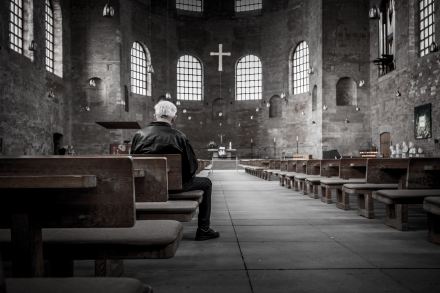
“The Lord will work out his plans for my life— for your faithful love, O Lord, endures forever. Don’t abandon me, for you made me.” Psalms 138:8 NLT

This is the confidence every Saint should have, namely that The Lord will fulfill His purpose and plans in their life, because He is faithful and He loves them immeasurably!

This was the same confidence that the Apostle Paul had for the Philippians when he said that he was confident that “He who began a good work” in them would “complete it”.

Do you live with this confidence that God is working in your life and in the lives of all His Church? It helps fuel our confidence to look at the work God has begun in a child of God, then to look for ways He is currently working. The result will be great confidence that God is going to finish what he started. God doesn’t have a habit or reputation for starting art projects and not finishing them. He isn’t a distracted, disengaged, disinterested artist or parent. He is the Ultimate Artist who finishes His work. He is the Ultimate Father who parents His children fully. He is intimately involved in the details of our lives and He cares more deeply than any other person in the entire universe.

    Reflect on what God has done in your life today.
    Observe ways that He is currently working in your life.
    Rest assured that He will finish His good workmanship (Ephesians 2:10) in your life, and in the lives of Christ followers whom know.

Excellence In Loving

“Strive to excel in building up the church” 1 Cor.14:12

Excellence is a quality that God exemplifies and one that He calls his people to pursue. The English definition for excellence is “the quality of being outstanding or extremely good”. The Apostle Paul in this text called the church to pursue excellence in loving those among their community by building them up, with their spiritual gift. Spiritual gifts and strengths are not given to boast and flaunt in or to impress others with. Rather the gifts are given for the purpose of building up others and bringing glory to God through doing so (1 Peter 4:10–11).

The Apostle Paul spent an entire chapter describing and defining what love is so that Corinthians wouldn’t miss the main point of the Christian life. Paul also gave practical ways that the church could use their gift to express love and encourage the Saints. He cast vision for excellence in loving one another. Anyone seeking to grow in exercising their spiritual gifts or natural strengths ought to do so with the aim to love. As Eugene Peterson put it paraphrasing Romans 15:2: “Strength is for service not status”.

Are you using your gifts and strengths to pursue an excellence of status or an excellence in service to those around you?

Learning To Pray From Psalm 25

Learning how to pray effectively, faithfully, fervently and biblically is challenging for many Christians. Francis Chan said a group of over 50 thousand college students at the Passion conference in 2015: “My biggest concern for this generation is your inability to focus, especially in prayer.”  

If I were to ask you how is your prayer life how would you answer that? Or if I was more specific are you spending regular time with God in prayer daily what would you say? 

Or to take it a step further are you enjoying God in regular times of prayer? Now I don’t intend to do any drive by guilting knowing know that many Christians don’t have a prayer life that the Scripture calls them to live . But  I desire to stir you up to live prayerful lives knowing that it is clearly God’s will for us expressed in Scripture that you be a prayerful person (1 Thess. 5:16-17, Colossians 4:2, Romans 12:12). And I want to give you some helpful tools for prayer from the Scriptures. Specifically, I would like to look at the Psalms a language book for prayer. Anyone who learns language does so best be immersion in the language and the book of Psalms gives us language for prayer, as one church father wrote: 

“Most Scriptures speak to us; the Psalms speak for us”    Athanasius  

* My one and half year old son Justus is at the stage where he is straining to communicate with his words which often come out as grunts, groans and expressions of frustration because it is difficult for us to understand him. Nevertheless, he is picking up words and when our family hears him say a word clearly it brings delight to all of us in the family because it’s the first time we hear him say certain things. We are immersing the youngest member of our family in the English language and it won’t be very long before he is communicating more clearly in English. As children of God we don’t have to remain stuck in frustration of not knowing how to communicate to God and pour out our souls to Him. We have been given access to the Father and we have His ear towards us. Though we may struggle to find the write words God has given words in Scripture to help guide us in developing a vibrant prayer life from the book of Psalms. 

Eugene Peterson wrote these words about praying the Psalms :

If we want to pray our true condition, our total selves in response to the living God, expressing our feelings is not enough – we need a long apprenticeship in prayer. And then we need graduate school. The Psalms are the school.

The Psalms are the cemetery in which our Lord the Spirit leads us to get out of ourselves, to rescue our prayers from self-absorption. and set us on a way to God-responsiveness.  Eugene Peterson, Under the Unpredictable Plant 

Ambrose called the Psalms a “gymansium”; in we go for daily workouts, keeping ourselves in shape for a life of spirituality, fully alive human beings.

Dietrich Bonhoeffer in his book Life Together wrote this about the important of learning to pray from the Psalms: 

“The prayers of David were also prayed by Christ. Or better Christ himself prayed them through his forerunner.”

“It would not be difficult to arrange all of the Psalms according to the petitions of the Lord’s Prayer. We should need to change only slightly our arrangement of the order of the sections” 

“The Psalter is the prayer book of Jesus Christ in the truest sense of the word. He prayed the Psalter and now it has become his prayer for all time…we understand how the Psalter can be prayer to God and yet God’s own Word, precisely because here we encounter the praying Christ…because those who pray the psalms are joining in with the prayer of Jesus Christ, their prayer reaches the ears of God. Christ has become their intercessor…

“In the Psalter we learn to pray on the basis of Christ’s prayer. The Psalter is the great school of prayer. Here we learn, first, what prayer means.  It means praying according to God’s Word, on the basis of His promises…the whole sweep of the Book of Psalms was concerned with nothing more nor less than the brief petitions of the Lord’s Prayer. In all our praying there remains only the prayer of Jesus Christ…The more deeply we grow into the psalms and the more often we pray them as our own, the more simple and rich will our prayer become.”

What is prayer?

  • Prayer is pouring out our hearts to God in praise, petition, confession of sin, and thanksgiving. New City Catechism
  • Prayer is personal address to a personal God. Ed Clowney
  • Prayer is a personal, communicative repose to the knowledge of God. Tim Keller, 
  • Prayer is a response to God who speaks to us. God’s word is always first. He gets the first word in, always. We answer. Eugene Peterson
  • Prayer is a conversation, but not one we start. God speaks first. His voice sounds in the Scriptures and climactically in the person and work of his Son. Then, wonder of all wonders, he stops, he stoops, he bends his ear to listen to us. David Mathis, Habits of Grace
  • If prayer to be a true conversation with God, it must be regularly preceded by listening to God’s voice through meditation on Scripture. Tim Keller

Let’s look at Psalm 25 to learn several lessons on prayer from David who was one of the greatest prayer warriors in Scripture. 

  1. Prayer is a lifting of the soul to the Lord (directing desire). 
  • To you, O Lord, I lift up my soul. -V1

Matthew Henry wrote this about: “Prayer is the ascent of the soul to God; God must be eyed and the soul employed”

Charles Spurgeon commenting on this said:

True prayer may be described as the soul rising from earth to have fellowship with heaven; it is taking a journey upon Jacob’s ladder, leaving our cares and fears at the foot, and meeting with a covenant God at the top. Very often the soul cannot rise, she has lost her wings, and is heavy and earth bound; more like a burrowing mole than a soaring eagle. At such dull seasons we must not give over prayer, but must, by God’s assistance, exert all our powers to lift up our hearts. Let faith be the lever and grace be the arm, and the dead lump will yet be stirred.

2. Prayer is an expression of trust in the Lord. V2 

  • O my God, in you I trust; let me not be put to shame; let not my enemies exult over me.

3. Prayer involves waiting on God. V3, 21

  • Indeed, none who wait for you shall be put to shame; they shall be ashamed who are wantonly treacherous. Psalm 25:3 
  • May integrity and uprightness preserve me, for I wait for you. Psalm 25:21

Eugene Peterson wrote that: “Waiting in prayer is a disciplined refusal to act before God acts.”

The Puritans would say “pray until you pray.” 

D.A. Carson wrote about this explains what they meant : “What they mean is that Christians should pray long enough and honestly enough, at a single session, to get past the feeling of formalism and unreality that attends not a little praying…If we “pray until we pray,” eventually we come to delight in God’s presence, to rest in his love, to cherish his will. Even in dark or agonized praying, we somehow know we are doing business with God. In short, we discover a little of what Jude means when he exhorts his readers to pray “in the Holy Spirit” (Jude 20)—which presumably means it is treacherously possible to pray not in the Spirit.”

4. Prayer aligns our lives with God’s will and requests His guidance- V4-5

  • Make me to know your ways, O Lord; teach me your paths.Lead me in your truth and teach me, for you are the God of my salvation; for you I wait all the day long. Psalm 25:4-5 ESV 

5. Prayer involves requesting forgiveness accompanied by  confession . V7,11

  • Remember not the sins of my youth or my transgressions; according to your steadfast love remember me, for the sake of your goodness, O Lord!   V7
  • For your name’s sake, O Lord, pardon my guilt, for it is great. V11

6.  Prayer involves appealing to God’s character. V6-7

  • Remember your mercy, O Lord, and your steadfast love, for they have been from of old. Remember not the sins of my youth or my transgressions; according to your steadfast love remember me, for the sake of your goodness, O Lord!   Psalm 25:6-7 ESV 

Charles Spurgeon wrote this about appealing to God’s character in prayer: “You or I may take a hold at any time upon the justice, the mercy, the faithfulness, the wisdom, the long suffering, the tenderness of God; and we will find every attribute of the Most High to be, as it were, a great battering ram with which we may open the gates of heaven.”               

7. Prayer focuses on God’s works and ways. V8-10 

Good and upright is the Lord; therefore he instructs sinners in the way. He leads the humble in what is right, and teaches the humble his way. All the paths of the Lord are steadfast love and faithfulness, for those who keep his covenant and his testimonies. V8-10 

8. Prayer is invoking God’s name -V11

  • For your name’s sake, O Lord, pardon my guilt, for it is great. Psalm 25:11 ESV 

9. Prayer is about experiencing intimacy with God-V14

  • Who is the man who fears the Lord? Him will he instruct in the way that he should choose.  His soul shall abide in well-being, and his offspring shall inherit the land. The friendship of the Lord is for those who fear him, and he makes known to them his covenant.  Psalm 25:12-14 ESV 

One of the greatest things about prayer is that through it we get closer to God. We get the great privilege of being friends of God and through this friendship He shares things with us that are dear to His heart. Verse 14 reminds me of Abraham’s relationship with God which was described as a friendship (James 2:23). 

10. Prayer is about focusing our eyes and ears toward God-15

  • My eyes are ever toward the Lord, for he will pluck my feet out of the net.V15

Jesus “lifted up his eyes to heaven” when he prayed his great high priestly prayer in John 17:2. 

11. Prayer involves pouring our hearts out to God- V16-20

  • Turn to me and be gracious to me, for I am lonely and afflicted.The troubles of my heart are enlarged; bring me out of my distresses. Consider my affliction and my trouble, and forgive all my sins. Consider how many are my foes, and with what violent hatred they hate me. Oh, guard my soul, and deliver me!Let me not be put to shame, for I take refuge in you. Psalm 25:16-20 ESV

David’s Troubles Included

  • Loneliness-V16
  • Affliction-V16
  • Distress-V17
  • Guilt-V7,11,18
  • Enemies -V2
  • Need for Guidance-V 4-5,8-10

12. Prayer is taking refuge in God-V20

  • Let me not be put to shame, for I take refuge in you. Psalm 25:20 ESV

13. Prayer involves petitioning on behalf of others.-V22

  • Redeem Israel, O God, out of all his troubles. V22 

Note that in the Lord’s prayer that Jesus taught His followers to “our Father”, “give us”,”Forgive us”, “deliver us”… This connects our prayers to the entire faith community which we have become united with through Christ. The Apostle Paul instructed the Saints in Ephesus to make supplications for all the Saints (Ephesians 6:18). 

  • So if you need to help in your prayer life then let me encouraged you to use the Psalms as regular tool for your prayers. Allow them shape your prayers and give language to your prayers. Use them as a springboard for communion with God and praying for the church and the world around you.  
  • Write out prayers to better focus and engage. This could also serve as a reminder for when prayers are answered that you may have forgotten about.
  • Sing the Psalms using melodies put to the Psalm that you already know or make up your own melodies for the Psalms. There are excellent albums that that use the content of the Psalms such as Shane and Shane albums Psalms volume 1 and 2.
  • Teach and admonish other Christians with the Psalms (Col. 1:16, Ephesians 5:19). According to the Apostle Paul this is to be a regular element in our corporate worship. 

May God bring revival to your personal prayer life as you engage in the ongoing conversation that He has invited you into!

Expect Hard Times

Paul and Barnabas gave the believers a realistic expectation when they preached to them and encouraged them to persevere. Those who see the world through rose-colored glasses need this reality check that Paul & Barnabas gave. They were echoing the words of our Lord Jesus.

“After proclaiming the Message in Derbe and establishing a strong core of disciples, they retraced their steps to Lystra, then Iconium, and then Antioch, putting muscle and sinew in the lives of the disciples, urging them to stick with what they had begun to believe and not quit, making it clear to them that it wouldn’t be easy: “Anyone signing up for the kingdom of God has to go through plenty of hard times.” Acts‬ ‭14:21-22‬ ‭MSG‬‬

So here are some of the “various” types of hard time you will face as a follower of Jesus.

• Expect tribulation (John 16:33)

• Expect persecution (2 Timothy 3:12)

• Expect spiritual warfare (Ephesians 6:10-20

• Expect storms (Acts 27)

• Expect times of discouragement (2 Corinthians 1:3-6, 6)

Following Jesus involves being on that narrow and difficult path. Though there is pain, difficulty and discouragement there is also joy, glory, comfort & encouragement (2 Cor. 4:18, Philippians 2:1-2,)

Be of good cheer for I have overcome the world is what our Lord said!

7 Implications of the Incarnation


greyson-joralemon-171172-unsplash

What is Christmas really about? Our culture puts the Christmas emphasis on many things that miss the point of the holiday. Jesus truly is the reason for the season. And the specific profound theological truth that Christians celebrate during the Christmas season is the incarnation of Christ. As one theologian wrote “The Christmas message rests on the staggering fact that the child in the manger was —God.” (J. I. Packer,Knowing God). The Apostle John explained the meaning of Christmas by declaring the incarnation of Jesus as the Eternal Word & who was and is God:

And the Word became flesh and dwelt among us, and we have seen his glory, glory as of the only Son from the Father, full of grace and truth.   John 1:14 ESV

This verse about the incarnation of Christ is loaded with massive theological implications. The Incarnation reveals the generosity of God, manifests the love of God, highlights the faithfulness of God, shows us the humility of God, points to the sympathy of God, brings us the presence of God and displays the power of God. Let’s take a look at each of these implications through which we see “his glory” displayed. 

1. The Incarnation tells us of the generosity/grace of God 

Eugene Peterson paraphrased “full of grace and truth” in John 1:14 as “Generous inside and out true from start to finish.”         

The Apostle Paul wrote the Corinthians: “For you know the grace of our Lord Jesus Christ, that though he was rich, yet for your sake he became poor, so that you by his poverty might become rich”  2 Corinthians 8:9 ESV 

The incarnation was an act of the God of grace extending grace to a ruined and lost humanity desperately in need of God’s grace. 

And if God has shown us such generosity and grace then we ought to show it to others as well especially during the Christmas season. As J.I. Packer wrote:

“The Christmas spirit does not shine out in Christian snob. For the Christmas spirit is the spirit of those, who like their Master, live their whole lives on the principle of making themselves poor—spending and being spent- to enrich their fellow humans, giving time, trouble, care, and concern, to do good to others—not just their own friends—in whatever way there seems need” (J.I. Packer, Knowing God, Page 64) 

2. The incarnation manifests the love of God 

In this the love of God was made manifest among us, that God sent his only Son into the world, so that we might live through him. 1 John 4:9 ESV

 “For God so loved the world, that he gave his only Son, that whoever believes in him should not perish but have eternal life. John 3:16 ESV

God loves you and has displayed His love for you by sending his Son into the world to live a life as a human, experiencing struggle, temptation and then suffering and death for your sins. 

3. The incarnation points to the sympathy of God 

Therefore he had to be made like his brothers in every respect, so that he might become a merciful and faithful high priest in the service of God, to make propitiation for the sins of the people. 18 For because he himself has suffered when tempted, he is able to help those who are being tempted15 For we do not have a high priest who is unable to sympathize with our weaknesses, but one who in every respect has been tempted as we are, yet without sin. 16 Let us then with confidence draw near to the throne of grace, that we may receive mercy and find grace to help in time of need.     Hebrews 2:17-18, 4:15-16 ESV 

J.C. Ryle wrote this about the sympathy of God revealed through the incarnation: 

“Did the Word become flesh? Then He is One who can be touched with the feeling of His people’s infirmities, because He has suffered Himself, being tempted. He is almighty because He is God, and yet He can sympathize with us, because He is man.” 

Another theologian wrote this about the the incarnation

“God was born as a baby, grew as a human being, and walked this earth as a man. This historical reality represents perhaps one of the strongest responses to the problem of evil. Rather than remain aloof and distant, God entered our world of pain, frailty, vulnerability, suffering, and death. He walked alongside us in every way and endured the full fury of evil, oppression, and injustice. When we suffer and when we have to watch those whom we love suffer, we do so knowing that God suffered alongside us and on our behalf in order to rescue us from suffering and provide an eternal home with no tears, death, mourning, crying, or pain.” Andreas J. Köstenberger, The First Days of Jesus: The Story of the Incarnation

God gets you. He knows your pain. Christ entered into your suffering and took it on himself so that eternally you may life without pain, suffering or death (Revelations 21:4).

4. The incarnation brought us the presence of God. 

…and dwelt among us… John 1:14 ESV 

“Behold, the virgin shall conceive and bear a son, and they shall call his name Immanuel” (which means, God with us). Matthew 1:23 ESV

The best present that we all get through the incarnation is God’s presence. We get God with us. After Jesus resurrected and ascended into Heaven he didn’t leave us with out his continuing presence because he gave us His Holy Spirit.  

5. The incarnation shows us the humility of God

To come near to be with us Jesus had to go low for us. He lowered himself to becoming an embryo in the womb of a poor teenager of a small Jewish village. He lowered himself even further when he became obedient to the point of dying a shameful death unjustly between two criminals.  

Have this mind among yourselves, which is yours in Christ Jesus, who, though he was in the form of God, did not count equality with God a thing to be grasped, but emptied himself, by taking the form of a servant, being born in the likeness of men. And being found in human form, he humbled himself by becoming obedient to the point of death, even death on a cross”  (Philippians 2:5-9 ESV). 

Jesus went low for you to serve you and I. May we do the same for others washing feet so to speak as our Lord did.  

6. The incarnation highlights the faithfulness of God

The New Living translation translated the phrase “grace and truth” in John 1:14 as “He was full of unfailing love and faithfulness”. The incarnation is fulfillment of what God promised through the Prophets that He would do by sending a Messiah, a Deliverer, a Savior. Matthew helps us see how God was faithful to His promises by writing:

She will bear a son, and you shall call his name Jesus, for he will save his people from their sins.” 22 All this took place to fulfill what the Lord had spoken by the prophet: 23  “Behold, the virgin shall conceive and bear a son, and they shall call his name Immanuel” (which means, God with us) (Matthew 1:21-23 ESV).  

God is a promise maker and a promise keeper. He is faithful to His promises. When He says He is going to do something He does it.  

7. The incarnation was a display the power of God. 

It was a supernatural occurrence for Mary the young virgin to become pregnant without having been sexually intimate with a man.  

“And Mary said to the angel, “How will this be, since I am a virgin?” 35 And the angel answered her, “The Holy Spirit will come upon you, and the power of the Most High will overshadow you; therefore the child to be born will be called holy—the Son of God. 36 And behold, your relative Elizabeth in her old age has also conceived a son, and this is the sixth month with her who was called barren. 37 For nothing will be impossible with God.” 38 And Mary said, “Behold, I am the servant  of the Lord; let it be to me according to your word.” And the angel departed from her (Luke 1:34-38 ESV).

The virgin birth was a miracle just as many other redemptive events that God performed were. The resurrection of Jesus’ dead body was a miracle and a display of God’s power. Through the miraculous event of the virgin birth and incarnation the God the Son became killable. He took on a human body so that he could be killed for the sins of the world and then be resurrected from the dead. These are essential and crucial elements of the faith for the follower of Christ. 

May this Christmas season be one of the most meaningful and worshipful seasons for you as you reflect on what the incarnation of God the Son means for us!

Facing Our Faults

nik-shuliahin-BuNWp1bL0nc-unsplash

Who can discern his errors? Declare me innocent from hidden faults.Keep back your servant also from presumptuous sins; let them not have dominion over me! Then I shall be blameless,and innocent of great transgression. Let the words of my mouth and the meditation of my heart be acceptable in your sight, O Lord, my rock and my redeemer.                                                                 Psalm 19:12-14 ESV

I’ve heard it said that we should repent of all our sins even the sins we don’t know about. Yes, we should confess & forsake all our sins but how do we repent of the sins of which we aren’t even aware?

David seemed to imply that knowing all the lurking sins in his heart was beyond him. So one thing David did do is pray that God would cleanse him from hidden faults and keep him from presumptuous sins. He prayed that his own thoughts and words would be pleasing to God (Psalm 19:14). He also asked the Lord to search him and reveal any hurtful or grievous way in him (Psalm 139:24). We need the help of God, who knows all things (1 John 3:20), to search us and reveal the areas of sin in our lives. He will graciously do this if we ask him. And if we really care enough about repentance and pleasing God then we will ask him to search us, reveal sin in us and lead us in the way everlasting! 

Pastor Tim Keller said that “We are more sinful and flawed in ourselves than we ever dared believe, yet at the very same time we are more loved and accepted in Jesus Christ than we ever dared hope.” Understanding this is what will help us to see God’s grace as amazing and lead us to freedom from guilt and shame, yet at the same time face reality of our brokenness with honesty and confession.  

There have been times that I’ve felt a lingering sense of guilt or disconnect from God but I wasn’t able to identify a specific area of sin. One question that I’ve found helpful to ask God in those moments is: “Father, what is your most pressing issue with me today?” 

In response to that prayer the Holy Spirit has been faithful to show me specific areas of sin to confess and forsake so that I can properly take responsibility for sins that have damaged relationships. God is never surprised by our sinfulness though we might be caught off guard by the how flawed and sinful we are. When the Lord reveals an area of sin in our lives to us it’s our opportunity to embrace and believe the gospel for ourselves afresh. It’s our opportunity to apply the powerful truth of 1 John 1:9, which I call the “Christian’s bar of soap”. It says:

If we confess our sins, he is faithful and just to forgive us our sins and to cleanse us from all unrighteousness.                  1 John 1:9 ESV 

This verse is good news for the guilty and ashamed. May we become those who continue to shorten the gap of time between the moment we sin and the moment we confess our sins so that we can experience more of the abundant life that Jesus has for us.

7 Things To Consider At Funerals

stefan-kunze-oLdm7mnhDic-unsplash.jpg

Some people don’t like funerals, but I do. It’s not because I’m a morbid opportunist but rather I am a realist who has a hope beyond this life because of the gospel of Jesus Christ. Funerals have a way of giving us a reality check that we all need from time to time so that we can make necessary adjustments in our lives to live well. We tend to get so caught up with work, family, entertainment & hobbies that we often don’t spend adequate time thinking about what matters most. When someone close to us dies it has a profound  way of getting our attention and slowing us down to reflect the important things in life. Funerals help us to do that. The Bible says:

Better to spend your time at funerals than at parties. After all, everyone dies—so the living should take this to heart.  Ecclesiastes 7:2 (NLT)

What should we take to heart?

1. The brevity of life. We often presume upon the future making plans as if tomorrow is certain. Our lives here on earth are so short. When we are young and healthy looking forward to our future we may subconsciously think we have forever here in this life on earth. However, the time passes swiftly. Your life is like a vapor (James 4:14). 

2. The appointment of death and judgment is certain. The bible saysit is appointed for man to die once, and after that comes judgment” (Hebrews 9:27). We all have an appointment that we are not going to miss or be late for even if you’re one who struggles to make appointments. 10 out of 10 people die. It’s the ultimate statistic.

3. The necessity of peace with God through Christ (Romans 5:1-2). One of the most important things to consider with the reality of that appointment you have coming is your need for peace with God. This is not something to put off. You and I need peace with God before we stand before God at the judgement. Standing before a judge in the court of law is a very intimating experience, especially when you are guilty and giving an account. And Jesus has provided peace with God for us by taking our punishment for our sins on himself. 

4. The reality that Christ is the resurrection and the life. Jesus said “I am the resurrection and the life. Whoever believes in me, though he die, yet shall he live” (John 11:25). This is really good news for us who believe! The grave is not our final destination, Heaven is! And we will be resurrected with Christ living in a world of perfect peace, justice & love. There will be no more suffering, pain, sorrow or death. It will be glorious, beautiful, satisfying and eternal!

5. The importance of love for those around you who are living (Matthew 22:37-40). When it’s all said and done this is what really matters. Did we live our lives in love for God & others.If I were to see a movie of my entire life this is the number one thing I would want to see myself doing, loving God & loving people. We all have scenes where that is not the case and we have lived selfishly in so many ways, yet God is an amazing editor. Because of Jesus He cast our sins as far as the east is from the west. He washed our sins away with the blood that Jesus shed for us at the cross.

6. The urgency of making your life count (Ephesians 5:16, Psalm 90:12) In view of the reality of death let it motivate you to live for what really matters. There are opportunities that you have today that you may not have tomorrow. There people you can reach today with the love & truth of Christ that you may not have tomorrow. Beware of being lulled to spiritual slumber with the comforts, pleasures & entertainment of this life. Your time here in this life is a precious gift. Don’t waste it!

7. The purpose of your life (Isaiah 43:7, Revelation 4:11). Consider the big question of why you are even here alive today. Your loved one just transitioned into the next life but you are still here for a reason. Make sure you know what that reason is and that your living for it.

Sharing Your Story

nik-macmillan-YXemfQiPR_E-unsplash.jpg

When was the last time you shared your story of how you became a Christian with an unbeliever? If you can’t remember the last time that happened then perhaps it’s time to do that again with some people that are in your circle of influence. Perhaps you don’t feel confident yet in doing that. Let me give you some helpful tips taken from the life of the apostle Paul. In Acts chapter 22, 24 & 26 the Apostle Paul shared his testimony before influential leaders. Luke must have considered this important since he recorded three occasions of Paul sharing his story. Jesus had said to his disciples that they “will be brought before kings and governors for my [His] name’s sake. This will be your opportunity to bear witness (Luke 21:12-13 ESV). Paul used these opportunities to share the gospel story and how it intersected with his story.  In Acts chapter 26 his structure for sharing his story was simple:

  • Before his conversion– Acts 26:4-11
  • His conversion– Acts 26:12-18
  • After conversion– Acts 26:19-23

First, Paul described what his life was life before he met Jesus. He described himself as a religious Pharisee and a persecutor of the church. Here of some of his specific descriptions in verse 4-11:

  • “I have lived as a Pharisee” 
  • “opposing the name of Jesus of Nazareth”
  • “locked up many of the saints in prison”
  • “when they were put to death I cast my vote against them”
  • “I punished them often in all the synagogues”
  • “tried to make them blaspheme”
  • “in raging fury against them I persecuted” 

Paul was a religious sinner who needed saving. He thought he was pleasing God but he was ignorant before he came to Christ. He was under the “domain of darkness”. Paul’s story was very dramatic. He was essentially a terrorist who became a missionary. 

What were you like before you came to Christ and trusted in Him for eternal salvation?

Were you religious, rebellious, immoral, proud, deceitful, greedy, angry, fearful, depressed, addicted, etc… Now you don’t have to have criminal record or past of addiction and immorality to have a powerful testimony. You may simply share how Christ protected you and drew you to himself at a young age through the witness of your parents.   

Secondly, Paul described how he came to Christ using these descriptions of his experience:

  • “I saw on the way a light from heaven” Acts 26:13
  • “I heard a voice saying to me… why are you persecuting me” Acts 26:14

Paul met the resurrected Christ and it changed the entire trajectory of his life. 

How did you come to Christ? Who did God instrumentally use to pray for you, speak to you, love on you to bring you to Christ? What circumstances did God use in your life to bring you to Himself? What mental barriers had to be overcome for you to trust in Christ and how did the Spirit prevail in your heart & mind? How did you respond when you began to understand and believe the gospel? 

These are questions to consider as you seek to develop and articulate your story and how the gospel story impacted your life. 

Thirdly, Paul shared what happen after he came to Christ. Paul became a preacher.

  • “I was not disobedient to the heavenly vision” -Acts 26:26
  • “I have had the help that comes from God” – Acts 26:22
  • “I stand here testifying both to small and great” – Acts 26:22

How has your life changes since you became a Christian? 

From Darkness to Light 

Paul wrote the Colossians and told them that [God] He has delivered us from the  domain of darkness and transferred us to the kingdom of his beloved Son, in whom we have redemption, the forgiveness of sins (Colossians 1:13-14 ESV).

Living under the “domain of darkness” is a life of bondage and Christ has redeemed & rescued us from that. No longer are we enslaved to sinful patterns, there is new freedom, there new life & a new trajectory for our lives. Instead of torment there is peace and rest in Christ. Instead of despair and depression there is joy, hope and purpose in Christ. Instead of hatred and violence there is love and acceptance in Christ. And we who belong to Christ will spend eternity in a world of perfect love where there is no more sickness, sorrow, war, death or injustice.  We have something to talk about! We have a powerful message of hope to share with the lost world.  

Tips From Paul 

Here are some tips to take note of and implement from Paul’s example as you seek to effectively share your story with others:

  • Paul shared his story with Readiness– V1-2
  • Paul shared his story with Respect– V2, 25 (most excellent Festus) 
  • Paul shared his story with Reason– V25 (I am speaking true and rational words)
  • Paul shared his story with Relevance– V6-7, 27 (King Agrippa, do you believe the prophets? I know that you believe)
  • Paul shared his story with Boldness-V26 (the king knows about these things, and to him I speak boldly.)
  • Paul shared his story with Purpose to share the gospel- V24

As you share your story with others do so with the aim of sharing the good news of Jesus. It’s the gospel story that people need to hear and believe to be saved (Romans 10:13-17). So interweave the gospel in your story. Share how the gospel story intersected in the history of your life in hopes that God would do the same in those to whom you speak. The gospel is powerful and believing it leads to eternal salvation (Romans 1:16).

Write It Out 

So it’s time to get prepared. The Apostle Peter wrote Christians exhorting them to:

always being prepared to make a defense to anyone who asks you for a reason for the hope that is in you; yet do it with gentleness and respect (1 Peter 3:15 ESV). 

If you haven’t written out your testimony that I encourage you to do so. This will help you think through and clarify what you will want to communicate to others. Then find someone that you can share your story with. Ask a coworker, classmate or neighbor if you can share with them your story of rescue. You may want to start by asking them about their spiritual life. Perhaps you will be instrumental in them coming to Christ!

Here is a sermon that I preached on this titled From Darkness to Light. I hope you are encouraged and equipped by listening to it.

5 Marks Of Spiritual Maturity

michal-parzuchowski-224092-unsplash

Not everyone who grows old actually grows up. It’s ideal that maturity and wisdom would accompany adulthood but that’s not always the case. There are plenty of childish and foolish adults. And there are lots believers who have been Christians for many years yet are still spiritual infants, needing to relearn the basics of the Christian faith (Hebrews 5:11-6:1).  From the bible’s perspective it’s not acceptable. This problem of spiritual immaturity isn’t a new thing or merely an American Christianity thing. It’s was a problem in the early church as well (1 Corinthians 3:1-3). 

Would you consider yourself to be spiritually mature and actively growing on your journey with Christ? 

There was a LifeWay research study on discipleship that revealed 55 percent of those who took the survey perceived they had grown spiritually. Yet only 3.5 percent of the people surveyed over the course of a year had any measurable growth. So only 3.5 percent of people reported that there was something different in the way they engaged the Word of God, shared Christ, or served others. Many Christian’s think that they are growing further along than they really are.   

So what does it look like to be spiritually mature?

1. The Spiritually Mature Have An Accurate & Sober View of Themselves

There are many marks of spiritual maturity that we can find in the New Testament. The first one that I would highlight is that the spiritually mature have an accurate evaluation of themselves. The Apostle Paul exhorted Christians in Romans 12:3  “…not to think of himself more highly than he ought to think, but to think with sober judgment, each according to the measure of faith that God has assigned.”  The spiritually immature, like little children, do not evaluate themselves soberly and accurately. How many times have you heard a child boast about how fast, strong or smart they are, thinking they can victoriously beat adults at various challenges. The mature adults, the mothers and fathers, might let these little ones win a game a time or two to build their confidence. But as a father of four children myself, I don’t want my children to think more highly of themselves than they ought to, so dad has to get his win too at basketball, checkers, soccer, baseball, Farkel, Jenga or whatever game we are playing :).     

2. The Spiritually Mature Are Doctrinally Stable 

The second mark of the spiritually mature is that they are doctrinally stable. They have developed biblical conviction concerning the basic truths of the gospel. In Ephesians chapter four the Apostle Paul wrote: 

“And he gave the apostles, the prophets, the evangelists, the shepherds and teachers, to equip the saints for the work of ministry, for building up the body of Christ, until we all attain to the unity of the faith and of the knowledge of the Son of God, to mature manhood, to the measure of the stature of the fullness of Christ, 14 so that we may no longer be children, tossed to and fro by the waves and carried about by every wind of doctrine, by human cunning, by craftiness in deceitful schemes”                                                                                                    Ephesians 4:11-14 ESV                                                                                               

Paul and other new testament writers struggled for the doctrinal stability of the early church in the face of many heresies, philosophies and traditions. One of many exhortations towards this doctrinal stability is this one:

Therefore, as you received Christ Jesus the Lord, so walk in him, rooted and built up in him and established in the faith, just as you were taught, abounding in thanksgiving.    Colossians 2:6-7 ESV 

Like a tree that is rooted and grounded able to withstand winds and storms, so Christians must be rooted and grounded in the gospel of Jesus Christ. Becoming rooted and grounded and doctrinally stable is what spiritual growth and maturity look like.

As a new believer in Christ I was watching TV one day, which I don’t recommend for spiritual growth, and a commercial came on with a pitch something like this: ‘If you want a better revelation of Jesus Christ then call this number and we will come to your home and give you a free book and talk you about Jesus.”  This was very appealing to me because I was really hungry to grow in my relationship with Jesus and wanted to better understand the bible. So I called the number and asked them to come to my house. Well, the guys who showed up at my door were Mormons and their free book was the book of Mormon. I was not rooted and grounded enough to protect myself from their false gospel. Thankfully my step father who was more mature in the Christian faith showed up and defended me like a shepherd would if a wolf crept in among the flock of sheep. The spiritually immature are tossed to and fro by every wind of doctrine. Like little children they are vulnerable to being persuaded by the person with a reasonable and convincing opinion or teaching. This is one reason why new Christians must actively seek to grow up spiritually.

3. The Spiritually Mature Speak the Truth in Love 

The third mark of the spiritually mature is that they communicate the truth in love. The previous mark was a doctrinal one and this is a relational characteristic. In Ephesians 4:15 following the verse we just looked at Paul contrasts the instability of the immature Christians with: 

Rather, speaking the truth in love, we are to grow up in every way into him who is the head, into Christ, from whom the whole body, joined and held together by every joint with which it is equipped, when each part is working properly, makes the body grow so that it builds itself up in love.    Ephesians 4:15-16 ESV

It’s the spiritually immature who avoid speaking the truth when it’s difficult or they may speak the truth harshly, insensitively lacking grace and love. They may also avoid others when there is a conflict giving an offender the silent treatment. In contrast the spiritually mature have learned to work through conflict by lovingly communicating the truth. Christians need truth and love to flourish in their spiritual journey with Christ and Christian communities should be saturated with those two elements. The spiritually mature help cultivate those elements of truth and love in a church. Jesus was full of grace and truth (John 1:14,18) and those who are growing spiritually are moving more towards being full of grace and truth. They are moving more towards communicating the truth in love. This is a mark of spiritual maturity and also the means by which growth occurs in the Body of Christ. 

4. The Spiritually Mature Are Others-Oriented 

The fourth mark of the spiritually mature is that they are others-oriented. They have learned to be more like Jesus which is synonymous with spiritual maturity. Every Christian is predestined to be conformed into His image (Romans 8:29). The spiritually mature do what Paul exhorted the Philippian church to do: 

Do nothing from selfish ambition or conceit, but in humility count others more significant than yourselves. Let each of you look not only to his own interests, but also to the interests of others. Have this mind among yourselves, which is yours in Christ Jesus…                  Philippians 2:3-5 ESV 

The spiritually mature have grown up and are actively growing into Christ-likeness. Jesus wasn’t selfishly seeking others to serve him. He humbly, lovingly and sacrificially served others.The spiritually mature move from selfishness to love and from self pity to rejoicing in the victories of others. They have learned to live, speak and think more like Jesus. 

Paul rebuked the spiritually immature Corinthians, who were very gifted with spiritual gifts but lacked the fruit of the Spirit. They were acting like childish toddlers and he wrote to them saying:

But I, brothers, could not address you as spiritual people, but as people of the flesh, as infants in Christ. I fed you with milk, not solid food, for you were not ready for it. And even now you are not yet ready, for you are still of the flesh. For while there is jealousy and strife among you, are you not of the flesh and behaving only in a human way? For when one says, “I follow Paul,” and another, “I follow Apollos,” are you not being merely human?                     1 Corinthians 3:1-4 ESV 

I have 4 young children and I know the displeasure of having strife, jealously and conflict in the home over the smallest things. Sometimes it’s so ridiculous that my wife and I just laugh at the immaturity of our children. It may be funny now but when our children are 20 or 30 years old it won’t be funny if they are still throwing temper tantrums and whining about the little things that steal their joy now.  

Paul likened his ministry to the Thessalonians to that of parental care of a father and mother (1 Thessalonians 2:7-8,11-12). The spiritually mature take on the mindset of a parent who focuses on helping their children reach their full potential and become productive citizens in society. To become those who don’t just consume but contribute to the good of their family, church, community, city and world. 

5. The Spiritually Mature Are Skilled With God’s Word

The fifth mark of the spiritually mature is that they are skilled in God’s Word. The author of the book Hebrews in chapter 5 wrote these strong words to Christians that should have been much further along on their journey with Christ:

About this we have much to say, and it is hard to explain, since you have become dull of hearing. For though by this time you ought to be teachers, you need someone to teach you again the basic principles of the oracles of God. You need milk, not solid food, for everyone who lives on milk is unskilled in the word of righteousness, since he is a child. But solid food is for the mature, for those who have their powers of discernment trained by constant practice to distinguish good from evil.                                                                                                                  Hebrews 5:11-14 ESV                                                                                           

The spiritually mature have exercised discernment with and practiced obedience to the word of God. They filter thoughts, ideas, decisions and actions through the grid of Scripture. They allow the Scripture to influence what they consider good or evil developing biblical convictions based on Scripture. They have become acquainted with the basics of the Christian faith and teach them to others. They’ve adapted the mindset of a parent who seeks to help their children grow by faithfully teaching them.   

With our 4 children my wife and I have different expectations for each child being at their different stages of development. With our newborn, Justus, we only expect him to eat, sleep and poop. And look really cute. When he needs our help to eat, sleep or poop or change a poppy diaper then we expect him to let us know by crying about it because he doesn’t speak actual words yet. Now for our 7 year old, we don’t expect him to cry when he’s hungry, sleepy or needs to use the restroom. We expect him to use his English words to communicate to us that he has a need or we expect that he will take care of it himself since he is able to do so. He can get snacks from the kitchen on his own. He can make cereal or a sandwich for himself and he doesn’t need us to feed him any longer. He can even help his sisters and baby brother since he has become a more skilled and responsible human. 

If your a new Christian and still feeding on milk that’s great. God delights in you and your growth every step of the way. My wife and I delight to see the development of our children. For those of you who have been Christians for years if your not serving and discipling someone else helping them grow in their faith it may be time for you to transition form being self-oreinted to others-oriented. It’s time to grow up into a spiritual mother or father who is responsible and sacrificial for others. You might start by praying for others who are struggling. Remember that Christ-likeness is the goal in spiritual maturity. We want to think, speak and live more like Jesus. That brings much glory to God and does much good to those around you.  

What are the next steps that God has for you on your journey with Jesus? No matter how far along you are on your journey there will be next steps for you. What are they? You may want to ask God what His most pressing issue with you is right now. 

Since we just looked at marks of the spiritually mature I think it would be fitting for me to write about some key ways that you can grow into a spiritually mature Christian in my next blog post. 

Here is a link to a sermon I preached that covered some of these marks: 

The Goal of Discipleship 

 

The Goal & Strategy For Discipleship

46573935_l

Most Christians know that they are responsible to make disciples. But many don’t know how to do that or know what the goal is in discipleship. The Apostle Paul gave us an example for the goal and strategy of discipleship. He wrote the Colossians saying:

Him we proclaim, warning everyone and teaching everyone with all wisdom, that we may present everyone mature in Christ. 29 For this I toil, struggling with all his energy that he powerfully works within me.       Colossians 1:28-29 ESV

Paul took seriously the great commission of Jesus to go and make disciples of all nations, baptizing them and teaching them to obey Jesus (Matt. 28:19-20). Finishing this mission was more important to Paul than his own life (Acts 20:24). In these verses we see Paul’s aim in discipleship and his strategy to achieve his target. His goal was to help people become mature Christians. And he sought to do that through the means of proclaiming Christ, warning and teaching others. Notice that Christ was the central message Paul proclaimed. Paul knew that it’s the good news of Jesus Christ that every non-Christian needs to hear to become a Christian. And he knew that Christian’s must continue to be saturated in and grounded in the gospel of Christ for spiritual maturity to be developed in their lives. And this would require much teaching, preaching and even warning. Spiritual leaders must not fail to give necessary warnings to God’s people and they must not cease proclaiming the gospel of Christ, teaching the way of Christ. Kent Hughes commenting on this passage wrote:

“Christ-focused exposition progressively matures God’s people as they learn to see Christ in all of Scripture and to understand that the gospel is as old as the garden. Moreover, because Christ is “wisdom from God, righteousness and sanctification and redemption” (1 Cor. 1:30), Christ-focused exposition presents Him as the source and sustainer of spiritual maturity.”

So the goal in discipleship is maturity in Christ, which is synonymous with Christ-likeness. Every Christian is destined, or predestined rather, to be conformed into the image of Jesus (Romans 8:29). In following Jesus, that is what we are to aim for in our own lives and that is what we are to seek for those whom we disciple. We want to talk about Jesus, think like Jesus, speak like Jesus and live like Jesus so that the influence of Christ would be greater in the lives of those we disciple.

Paul toiled and struggled to help others become mature in Christ because spiritual maturity doesn’t occur automatically. Yet, Paul didn’t struggle and labor in his own strength. It was God’s energy that worked in him empowering him to do the ministry God called him to do. In verse 29 we see human responsibility and divine power working together. We have a significant part to play in making disciples, but know that God does the heavy lifting with his power working in us to will and do his good pleasure (Philippians 2:13). Paul wrote in 1 Corinthians 15:10, “But by the grace of God I am what I am, and his grace toward me was not in vain. On the contrary, I worked harder than any of them, though it was not I, but the grace of God that is with me.”

Paul gave the credit to God and His grace for the hard work that he did. This is the perspective and practice of spiritually mature Christians. Spiritually mature Christians realize their inability to produce fruit (John 15:5) and be effective in ministry apart from the grace of God. Spiritually mature Christians give God the credit for their success and fruitfulness in ministry rather than getting puffed up with pride. Spiritually mature Christians also seek to help others become mature by discipling them and praying for them. Paul was a spiritually mature Christian who struggled on behalf of other Christians so they might reach spiritual maturity (Colossians 1:29, 2:1). The spiritually immature are preoccupied with their own struggles and are not freed up to struggle for others.

So here we looked at the goal in discipleship being maturity in Christ and how to help others get there. Are you mature a Christian who is discipling someone else so that they can grow into Christlikeness?

In my next blog post I plan to write more about the marks of a spiritually mature Christian.

Bearing Much Fruit

maja-petric-8287-unsplash

If I were to ask those closest to you about the quality & quantity of the fruit in your life what do you think they would say? If I asked your spouse what would they say? What might they point to describe the fruitfulness of your life?

Jesus said that his followers would be marked by the fruitfulness and that fruitfulness would “prove” their authenticity as his disciple and bring much glory to the Father.

In John 15 verse 8 Jesus said:  By this my Father is glorified, that you bear much fruit and so prove to be my disciples

What does it look like to bear much fruit?

Here are a few biblical categories of what “much fruit” could fall under:

  • Character (Fruit of the Spirit)  But the fruit of the Spirit is love, joy, peace, patience, kindness, goodness, faithfulness, gentleness, self-control; against such things there is no law. And those who belong to Christ Jesus have crucified the flesh with its passions and desires. Galatians 5:22-23 ESV

Remember that Jesus said his followers would be marked and known by the their love. Outsiders can discern the true followers from the false by the fruit of love or the lack there of. Love is the overarching characteristic of a genuine follower of Jesus.

Jesus said: By this all people will know that you are my disciples, if you have love for one another.” John 13:35 ESV

  • Conduct (Good deeds)

Jesus commissioned his people to do good deeds to others (Matt. 5:16) so that people would give glory to the Father. Jesus himself did the ultimate good deed by dying for the sins of the world to redeem his own special people who are “zealous for good works” (Titus 2:14). One of the Apostle Paul’s prayer petitions for the Colossian disciples was that they would be people “bearing fruit in every good work” (Colossians 1:10). Good deeds are the domino effect of the good news of Christ impacting a life.

  • Converts (Disciples)

Jesus said “You did not choose me, but I chose you and appointed you that you should go and bear fruit and that your fruit should abide.I believe Jesus had in mind the people who His own disciples would impact when he said “your fruit should abide”. He commissioned his followers to go and make disciples, baptizing them and teaching them what he commanded (Matthew 28:20). The Apostle Paul wrote about the fruit of his own ministry to the Gentiles as an “offering” to God (Romans 15:16). Paul’s bearing much fruit was “to bring the Gentiles to obedience—by word and deed” (Romans 15:18).

  • Conversation (Fruit of Lips)

The way we speak to God in singing praise and giving thanks is the fruit of our lips (Hebrews 13:15). Our speaking about God to others is the fruit of our lips.

Jesus spoke about the things we say from our mouths as the fruit of our lives in Matthew chapter 12, when he was giving a heavy rebuke to the Pharisees. He said:

  • “Either make the tree good and its fruit good, or make the tree bad and its fruit bad, for the tree is known by its fruit. You brood of vipers! How can you speak good, when you are evil? For out of the abundance of the heart the mouth speaks. The good person out of his good treasure brings forth good, and the evil person out of his evil treasure brings forth evil. I tell you, on the day of judgment people will give account for every careless word they speak, for by your words you will be justified, and by your words you will be condemned.”     Matthew 12:33-37 ESV

Two Mischievous Brothers

I heard about two brothers that were mischievously sneaking out at night time and roaming the town doing things that they shouldn’t be doing. To do this without their parents knowing they would climb out of their window on the 2nd floor of their home and use a tree next to their house going up and down to sneak out. One day they over heard their parents talking about removing the tree from their yard because it seemed useless. The boys didn’t want their secret aid for sneaking out to be removed so they decided to purchase some apples from the grocery store and attach them to the tree with yarn in hopes that their parents would keep the tree. Not long after that their parents looked out at the tree one morning and saw apples on the tree and they were amazed. The father said to their mother “thats not an apple tree it’s a peach tree”.

A Christian’s fruitfulness isn’t merely a transplant of fruit or an attachment of busyness to their lives. Fruit is the result of being genuinely connected to Christ, possessing his divine life within. Fruit flows from the inside to the outside of a Christian. And the sap that nourishes the Christian is the grace of God.

God doesn’t call Christians to muster up fruit independently of His Son. He calls us to lean into His grace through abiding in His word and prayer. Recognize that Jesus is the source of your fruitfulness and your inability to produce any fruit independently of him. Do you really believe that apart from him you can do nothing? And do you really believe that if you abide in him you will bear much fruit (John 15:5)?

Jesus is the source of our life so our connection to Him is vital to produce any good fruit. Here is a sermon I preached about this entitled, Abiding in Christ.

Abiding In Christ- John 15:1-8

What is a True Disciple of Jesus?


ben-white-148430.jpg

If someone were to ask you what is a disciple of Jesus and how can I become a disciple, what would you say in response to that question? Where would you take them in the Scripture to explain what it means to be Jesus’ disciples.

Simply put a disciple is follower or student. Disciples of Jesus are believers in Jesus. They follow Him in faith & obedience. They stay in His word and keep their eyes on Him. Disciples of Jesus are lifelong students. Jesus is their teacher. Regardless of how far along you are on your journey with Jesus it’s important to remain teachable because His followers continue to learn their entire life.  

One text that I would turn to in to answer this question is John 8:31-36 where I believe Jesus gives us a glimpse of what a true is disciple is.

31 So Jesus said to the Jews who had believed him, “If you abide in my word, you are truly my disciples, 32 and you will know the truth, and the truth will set you free.” 33 They answered him, “We are offspring of Abraham and have never been enslaved to anyone. How is it that you say, ‘You will become free’?”

34 Jesus answered them, “Truly, truly, I say to you, everyone who practices sin is a slave to sin. 35 The slave does not remain in the house forever; the son remains forever. 36 So if the Son sets you free, you will be free indeed.   John 8:31-36 ESV

So here are some marks of a true disciple of Jesus:  

A True Disciple Prioritizes Christ & His word. -John 8:31

A True Disciple Perseveres in the faith. -John 8:31

A True Disciple Perceives the truth. – John 8:32

A True Disciple Progresses in freedom. -John 8:32-36

A True Disciple Produces good fruit. -John 15:8

Jesus said that we are truly his disciples when we continue in his word. This implies that we prioritize and perservere in believing, confessing & obeying his word. He says then we will know the truth and the truth will bring freedom into our lives.

Then in John chapter 15 verse 8 Jesus said this:

By this my Father is glorified, that you bear much fruit and so prove to be my disciples. 

Authentic followers of Jesus will have good fruit in their lives and that is proof of genuine discipleship. I plan to try and explain what that fruit is in the next blog post.

In light these marks of true Jesus followers would you consider yourself to be a true disciple of Jesus? 

 Sermon: Marks Of A True Disciple

A Labor of Love: Intercession

ben-white-128602

Who Do You Know That Prays Faithfully for You?
Who is the most prayerful person that you know that has had the most significant impact upon your life through their prayers? Think about the kind of life they live and what other characteristics mark their lives. Doesn’t it stir a gratitude in your heart to think about those who have covered you in prayer and brought you before the throne of grace, pleading with God to bring about His good plans for your life? Each of us has had someone’s prayers make a significant impact in our lives even if we can’t think of anyone that has prayed faithfully for us. If you don’t have anyone who has prayed faithfully for you then perhaps you should seek to befriend the kind of people that do pray faithfully & fervently living godly lives. Paul instructed His young disciple Timothy to pursue righteous, faith, love and peace along with those who call out on the Lord with a pure heart (2 Tim. 2:22). What if you not only had the precious gift of relationship with others that are praying for you but what if you became that praying person for others who faithfully praying brings them before the throne of grace? What if you were to be what you desired to see & have in relationship? The Lord has called His Church to pray much, not only about our own needs, hopes & dreams but also that we pray much for others. Praying for others is a mark of maturity in the life of a disciple and a necessary element to be an effective disciple maker. Like a father or a mother who has accepted the responsibility of parenting which requires putting priority of their children’s needs, so God calls us saints into the mature place of caring for other believers so that they may become all that God has created & planned for them to be. Intercession is simply the action of saying a prayer on behalf of another person.

Intercessory Prayer is Hard Work
In Colossians 4 Paul mentioned an example of an ordinary saint who was walking this out. As far as we know he didn’t have a position of apostle, pastor, teacher, evangelist, prophet, deacon,elder, etc… This man named Epaphras worked hard in prayer for the Colossians saints. He served the Lord Jesus & His Church by laboring for them intercession.
12 Epaphras, who is one of you, a servant of Christ Jesus, greets you, always struggling on your behalf in his prayers, that you may stand mature and fully assured in all the will of God. 13 For I bear him witness that he has worked hard for you and for those in Laodicea and in Hierapolis. Colossians 4:12-13 ESV

Praying for others faithfully & fervently can be difficult work. It means that we spend enough time thinking about them, caring for them and bringing them before the throne of grace. J.I. Packer in His book Praying: finding our way through duty to delight says this:

“If we are going to take time to think our way into the situations and personal lives on which our intercessions focus we may not be able to pray for as many items and issues. Our amplifyings and argumentation will [then] lift our intercessions from the shopping list prayer-wheel level to the apostolic category of what Paul called struggle.” J.I. Packer Carolyn Nystrom (See Colossians 1:29, 2:1-3, 4:12)

The Greek word translated struggling in Colossians 4:12 is agōnizomai. It means: to be a combatant in the public games; to contend, fight, strive earnestly. It looks & sounds similar to our English word agonize. This word is what Paul used to describe the labor of intercessory prayer. Intercessory is a labor of love. In it we love others enough to bear the burden for them and anguish for their souls. This struggle for the saints is something that Paul said he did “with all his energy that he powerfully works within me.” (Colossians 1:29). Though ministry is hard work that involves sacrifice & struggle the Saints are not left to their own willpower to carry it out in their own strength. Intercession is bringing the burden for others to God in prayer but we are to do so with the energy & strength that God provides. If we don’t draw on the strength of God to minster faithfully to others by praying for them then we will be danger of burning ourselves out and allowing the weight of ministry drain the life and joy out of us.
Intimacy with God must be sustained if intercession is to be sustained.

Andrew Murray said “It is prayer that lies at the root of spiritual life and power of the Church”. When asked the secret of his spiritual power, Charles Spurgeon said: “Knee work! Knee work! Billy Graham said, “The three secrets to successful ministry are: prayer, prayer and more prayer.”

Christ is Our Greatest Example of Intercession

Jesus has displayed the greatest expression of love for us by going to the cross for us. He did this prayerfully for us. You have been covered and are being covered in prayer by the great intercessor & High Priest Jesus Christ (John 17, Hebrews 7:25).
25 Consequently, he is able to save to the uttermost those who draw near to God through him, since he always lives to make intercession for them.  Hebrews 7:25 ESV

Who is to condemn? Christ Jesus is the one who died—more than that, who was raised—who is at the right hand of God, who indeed is interceding for us.  Romans 8:34 ESV

The hymn writer of I Stand Amazed In The Presence penned these powerful words:
“For me it was in the garden,
He prayed: “Not my will, but Thine.”
He had no tears for His own griefs,
But sweat-drops of blood for mine.
He took my sins and my sorrows
And He made them His very own
And bore the burden to Calvary
And suffered and died alone”

Stand amazed at His great love for you! Then let the domino effect of the gospel led you to love others like Christ has loved you (1 John 3:16).
If you desire to be more gospel-centered and Christ-like then becoming an intercessor who prays on behalf of others is the path you must take. This truly is a labor of love that Christ Himself performed flawlessly and is still serving us in that position of intercession today. Interceding for others is a significant way that we display Christlikeness and apply the gospel to our relationships, since Christ Himself is the ultimate intercessor. Our intercession for others is to be done in the name of Jesus, in His authority, for His glory and by His strength. We now have access to come boldly before the throne of grace because Jesus our High Priest has made a way for us. We can be an extension of His love and intercession for others who currently don’t have the access we have through the gospel work of reconciliation.

So make a prayer list for those in your church and pray faithfully for them. Spend enough time to think about their situations and struggles then roll the weight of that off to the Lord in prayer. What a privilege it is to carry everything to God in prayer!

Here is the Audio of this message preached @ City Church Garland:
A Labor of Love; Intercessory Prayer

Don’t Grieve the Holy Spirit

lkex3ofsghe-ben-white
Christian, I want to remind you that you have a person living inside of you, namely the the third person of the Trinity, the Holy Spirit. God’s Holy Spirit is a person & He dwells within each of us who have believed in Christ & become children of God (Ephesians 1:13, 1 John 4:13). God has “sealed” you with His Spirit & He is staying with you & in you. So don’t grieve the One who lives inside of you, who hears every word you speak, knows every thought you think, motive of your heart & feelings you have towards others. The Apostle Paul exhorted the Ephesian Christians with these words:
“And do not grieve the Holy Spirit of God, by whom you were sealed for the day of redemption.” Ephesians 4:30 ESV
  • When was the last time you grieved the Holy Spirit?
  • What does it meant to grieve the Holy Spirit?
We all need the reminder that God’s Spirit is a person dwelling in us & that He is there to stay. He leads us, guides us, teaches,us, comforts us, speaks to us, speaks through us, intercedes for us, helps us, secures us, enlightens us, empowers us & convicts us. Christianity cannot be walked out in our own human strength, wisdom & will power. Christians have the Holy Spirit to help us carry out the mission that we have been given here on earth. When a Christian doesn’t cooperate with the direction that the Spirit is leading by their words, attitudes & actions then they can quench or grieve the Holy Spirit.
Just before Paul gave the exhortation not grieve the Spirit he exhorted the Ephesians to have wholesome speech; Let no corrupting talk come out of your mouths, but only such as is good for building up, as fits the occasion, that it may give grace to those who hear (Eph. 4:29). When a Christian speaks words that don’t convey grace & edify those who hear then the Spirit is grieved. God wills to build people up & shape them through words of grace that are timely & appropriately spoken. God wants your speech to be a conduit of His grace into the lives of those around you at work, in your family, among your friends & neighbors.
Grieving the Spirit is also done by the attitudes & actions we display towards others. Paul after exhorting the Ephesians not to grieve the Spirit wrote: Let all bitterness and wrath and anger and clamor and slander be put away from you, along with all malice (Ephesians 4:31 ESV).
The negative attitudes & actions listed above each grieve the Holy Spirit when a Christian harbors them or carries them out. If we are the home or dwelling place for the Spirit to reside in & we are living with those attitudes & actions it’s time to clean house. It’s not pleasant to dwell in a dirty & stinky home. And we don’t have to clean house all by ourselves, we have a Helper, the Holy Spirit, who wants to assist us & guide us in the cleaning & organizing within our hearts & lives. He is all-wise, all-powerful & all-loving. He is gracious & patient with us in the cleaning process (sanctification). When we allow the Spirit to clean house within us, what it looks like is what Pauls exhorts the Ephesians with in verse 32:
Be kind to one another, tenderhearted, forgiving one another, as God in Christ forgave you (Ephesians 4:32 ESV).
These gracious actions & attitudes will mark the Christian who is cooperating with the Spirit & not grieving Him. Walking in a gracious, loving & Christ-like manner is a sweeting smelling aroma to God (Ephesians 5:2). So not only can we grieve & displease God with our words, attitudes & actions, we can also please & delight God. Let’s make it our aim to please God in every way & cooperate with the work of His Spirit in our lives. This might mean that we first have to do some inventory & examining of ourselves before God with the help of the Spirit.
Here are some possible indicators that you may be grieving the Spirit:
  • You lack peace in your heart.
  • You don’t have positive things to say to those around you.
  • You’re irritable, sharp & impatient with others.
  • You don’t sleep & rest well.
  • You’re anxious & fidgety.
  • You’re cynical & doubtful.
  • You have thoughts of regret.
  • You’re haboring, unforgivness & bitterness.
  • You feel disconnected with God.
  • You’re struggling to focus on your responsibilities.
Here is a helpful prayer to prayer as you allow the Spirit to search your heart:
How can I know all the sins lurking in my heart? Cleanse me from these hidden faults.Keep your servant from deliberate sins! Don’t let them control me. Then I will be free of guilt and innocent of great sin. May the words of my mouth the meditation of my heart be pleasing to you, O Lord, my rock and my redeemer Psalm 19:12-14 ESV

Knowing Jesus

Indeed, I count everything as loss because of the surpassing worth of knowing Christ Jesus my Lord. Philippians 3:8 ESV

Knowing  Jesus was the passion & pursuit of the Apostle Paul. He counted all of his accomplishments as rubbish compared to knowing  Jesus. Once his eyes were opened to the glorious worth of Jesus his value system changed. His pursuit was no longer directed at becoming the most religious guy around. He no longer put confidence in this flesh , trusting in his own righteousness or seeking the glory of what he could accomplish in his own strength (Phil. 3:3) . Jesus became the one he sought to glorify, rejoice in, trust in and aim to know. Living a life to know & glorify Jesus was worth it for the Apostle Paul. He became a true worshipper of the One True God and his former way of trying to worship God in his flesh was exchanged for worshipping in & by the Holy Spirit (Phil. 3:3).

Our Vision

Our vision at City Church Garland, the church which I currently serve as a pastor, is to Know Jesus, Love People and Impact Your World. We too have been changed by the powerful gospel of Jesus Christ and our value of knowing Jesus surpasses all other things this world has to offer. Knowing & loving Jesus is priority for us and we will commit our time and energy to this pursuit. He is worth it & it’s our joy know Jesus. Knowing Jesus is good for us, it’s good for our families, it’s good for our neighborhood, it’s good for our city.  When we know Jesus and continue to grow in our knowledge of him the beautiful and pleasant fruit of love, joy, peace, patience, kindness, goodness, faithfulness, gentleness and self control is displayed and experienced by those around us (Galatians 5:22-23). Who doesn’t want that?

In the Word 

So how can we get to know Jesus better? Get in His word. It is essential that we come before God daily spending time reading and reflecting on what God has spoken to us about who He is. The Scripture contains the revelation of God. So if we desire and pray for God to reveal himself to us we must behold God in the Scriptures. Specifically we should look at who is Jesus in the gospels. In Christ we see a perfect display of God manifested in human flesh. Jesus said if you’ve seen him then you’ve seen the Father (John 14:9).

Also, I would recommend mediating on the names, titles & attributes of God throughout the bible. Titles like the God of all grace, the God of patience & the God of justice each reveal an aspect of who God is. Phrases like the Lord is gracious, compassionate, slow to anger, and abounding in steadfast love help us know who God is.

Prayer & Worship

In response to the revelation that we behold in Scripture we are to approach God in worship and prayer. If we are to know Jesus better we must daily spend time in the wordreflecting on who He is, what says & what he does.Beholding & knowing the character of God is foundational & fuel for our worship. The more one beholds God and the beauty of who he is the more that person is able to respond properly worshipping in truth. It’s also foundational in prayer that one know that God is good & God is great. God is a good father and he delights to give good gifts to His children (Matt. 7:11). God is great and strong enough to answer our prayers. He is willing and He is able to answer our requests for deliverance, guidance, provision, wisdom, peace, etc…

Saints, let’s make knowing Jesus the priority & passion of our lives. Then we will be able to make Him known and lead others into a genuine relationship with Him effectively. We must abide in Jesus & His word if we are to be fruitful and effective in the mission before us (John 15:4-8). Let’s invest our time in the Word. Let’s give ourselves to prayer. Let’s worship our Lord for who He is. Knowing Jesus is worth more than anything this world has to offer!

Reflection Questions

1. What’s hindering you from knowing Jesus more?

2. Does the use of your time, money and energy display that you value knowing Jesus more than other things?